
Table of Contents
- What Travel Bassinet Bags Actually Solve for Parents
- Protection, Durability, and What to Look for in Travel Bassinet Bags
- The Best Portable Bassinet for Travel: Key Features That Separate Good from Great
- Traveling with a Newborn Tips: How the Right Bag Changes Everything
- Nappy Bag with Built-In Bed: One Bag vs Packing Two Separately
- Long-Term Value: Storage, Sustainability, and Lasting Use
- Cleaning, Maintenance, and Keeping Your Bag Travel-Ready
- Conclusion
Last Updated: August 23, 2026
What Travel Bassinet Bags Actually Solve for Parents
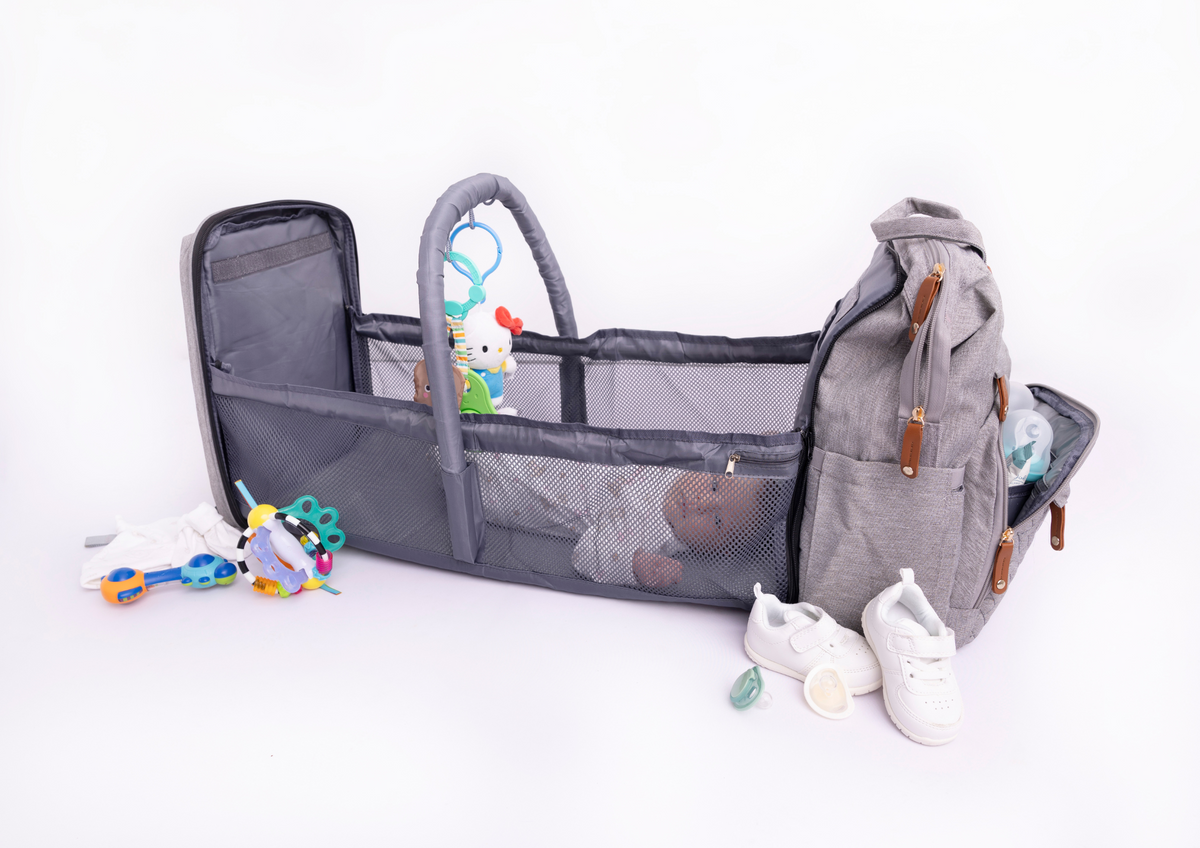
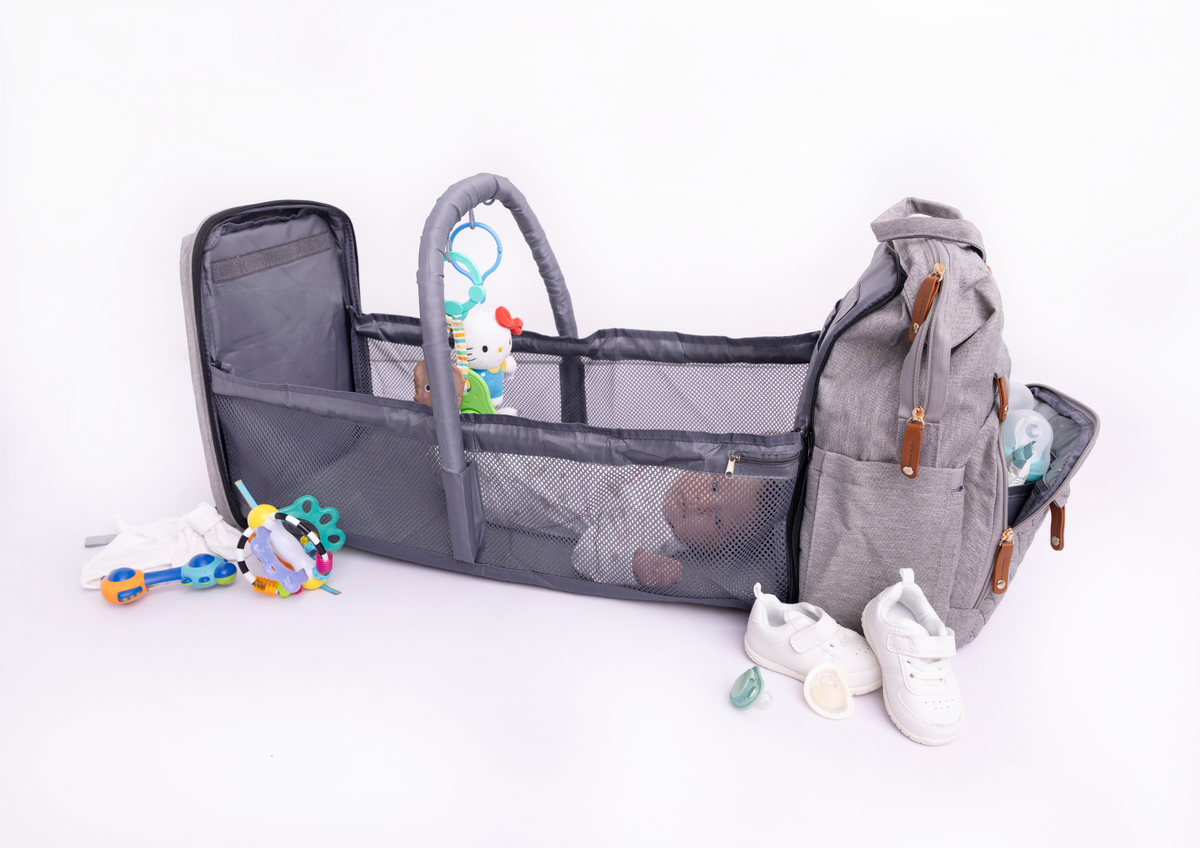
Travel bassinet bags combine a padded nappy bag with a portable, deployable sleep surface for infants, giving parents a single piece of gear that handles both storage and safe baby sleep away from home. At Bon Voyage Baby, we hear the same frustration constantly: you pack a nappy bag, a separate travel cot, a shade cover, and a mosquito net, then spend ten minutes at the airport trying to remember which bag has the dummy.
The real problem is coordination cost. Every extra bag is a decision point under pressure. Travel bassinet bags collapse that complexity into one object you can carry on one shoulder, set down anywhere, and have your baby asleep in under two minutes.
Protection, Durability, and What to Look for in Travel Bassinet Bags
Durability is the most common point of failure in baby travel gear. Many parents have experienced a "premium" bag whose handles fray after six months, whose zippers jam after one beach trip, or whose fabric pills after a few washes.
Materials and Construction: Why Fabric Grade Matters
Luggage-grade fabric is the benchmark to look for. Everyday nappy bags are often made from lightweight polyester or canvas that buckles under transit stress: being thrown into overhead bins, dragged across airport floors, or compressed under checked baggage.
Higher-specification bags use materials like 900D Oxford Cloth, a tightly woven, tear-resistant nylon-polyester blend that is standard in quality luggage. The "D" rating refers to denier, a measure of fibre thickness. Higher denier means greater resistance to abrasion and puncture.
Heavy-duty stitching at handle attachment points and zip edges is critical. These are the failure points. Reinforced handles with double stitching are the difference between a bag that lasts two years and one that lasts six months.
Cushioned Padding, Lockable Zippers, and Weather Resistance
Cushioned padding inside the bassinet section protects your baby from hard surfaces and provides the firm, flat sleep base that infant safety guidelines recommend. According to Red Nose Australia's safe sleep guidelines, a firm, flat, well-fitting mattress surface is essential for reducing infant sleep risk.
Lockable zippers deter tampering and keep compartments secure during transit. Weather-resistant outer fabric protects contents from sudden downpours, condensation in aircraft holds, or spilled drinks without adding significant weight.
The Best Portable Bassinet for Travel: Key Features That Separate Good from Great
The best portable bassinet for travel deploys quickly, packs flat, and creates a genuinely safe sleep environment without requiring tools or complex assembly. When your baby hits the wall mid-journey, a two-minute setup is the difference between a settled infant and a full meltdown.
Bassinet Compatibility and Weight Limits
Most purpose-built travel bassinet bags are designed for newborns up to around six months, or up to a manufacturer-specified weight limit. Check the weight limit before purchasing, particularly if your baby is already on the larger end of the growth curve.
A collapsible frame that folds flat inside the bag eliminates the need for a separate carry bag and keeps the whole system compact enough to qualify as a single piece of luggage.
Storage Organisation: Pockets, Compartments, and Insulated Sections
Storage organisation separates travel bassinet bags from basic nappy bags. The practical minimum for a full day out is: insulated pockets for bottles and formula, a wet-wipe dispenser for immediate access, a dedicated wet/dry compartment for soiled items, and inner storage pockets for dummies, nappy cream, and spare clothes.
Insulated pockets are particularly important for formula preparation. A bag with a USB port and audio jack integration allows parents to charge devices and play white noise without unpacking a separate speaker.
| Feature | Why It Matters | What to Look For |
|---|---|---|
| Luggage-grade fabric | Survives checked baggage handling | 900D Oxford Cloth or equivalent |
| Cushioned bassinet insert | Safe, firm sleep surface | Firm, flat, removable padding |
| Insulated pockets | Keeps bottles at temperature | Minimum 2 insulated sections |
| Lockable zippers | Security during transit | Dual-zip lockable pulls |
| Weather-resistant coating | Protects contents in wet conditions | Rated water-resistant outer layer |
| Collapsible frame | Compact storage, fast setup | Folds flat inside the bag |
| Reinforced handles | Long-term durability | Double-stitched, padded grips |
Traveling with a Newborn Tips: How the Right Bag Changes Everything
Most traveling with a newborn tips focus on what to pack. The more useful question is how your gear is organised, because with a newborn, you will be accessing your bag one-handed, in dim light, while holding a baby. A bag that requires two hands to open or buries the wipes under the nappy cream is a liability.
The right bag creates a system. You always know where the dummy is. The wipes are always in the same external pocket. That consistency reduces the mental overhead of travel with an infant to something manageable.
Airline Baggage Policies and Checked vs Carry-On Decisions
Airline baggage policies for baby gear vary significantly between carriers. According to Australian Competition and Consumer Commission guidance on airline passenger rights, airlines must clearly disclose their baggage policies, but the specifics of what counts as baby equipment versus standard luggage differs by carrier.
Most domestic carriers allow a pram or stroller as an additional checked item at no extra cost, but a travel bassinet bag may be assessed differently depending on its dimensions and weight. Confirm with your airline before travel:
- Does the bag's dimensions qualify as carry-on or does it need to be checked?
- Is a travel bassinet bag treated as baby equipment or standard luggage?
- What are the weight limits for carry-on items on that specific route?
A foldable design that compresses to carry-on dimensions is the safest option for parents who want to avoid checked baggage fees.
Nappy Bag with Built-In Bed: One Bag vs Packing Two Separately
The case for a nappy bag with built-in bed comes down to a simple trade-off: one specialised piece of gear versus two general ones. Two separate bags mean two separate security checks, two items to stow in a hire car, two things to carry through a terminal when one arm is already occupied.
A purpose-built all-in-one removes the seams between sleep gear and daily essentials, which is where most travel stress originates.
DIY Solutions vs a Purpose-Built Bag
DIY travel bassinet solutions, such as repurposing a large duffel bag with a foam insert, cost less upfront and may suit occasional travellers. However, they lack a mosquito net that attaches cleanly to the frame, a shade cover that blocks direct sun without flapping, or insulated pockets sized for standard baby bottles. The ergonomic handles will not be padded for long carries, and the fabric will not be tear-resistant or weather-resistant.
A purpose-built bag is a system where each element is designed to work with the others. The mosquito net clips to the frame. The shade cover attaches to the same anchor points. That integration is what DIY solutions cannot replicate.
Long-Term Value: Storage, Sustainability, and Lasting Use
A travel bassinet bag is not a single-stage product. The best designs account for the fact that your baby will outgrow the bassinet function before they outgrow the need for a well-organised travel bag. A removable built-in bed means the bag continues to function as a high-capacity nappy bag through the toddler years and beyond.
This matters for sustainability as well as value. A bag designed for lasting use, built from durable nylon with reinforced handles and a modular interior, reduces the number of products you cycle through. For parents concerned about upfront cost, the relevant comparison is total cost across years of use.
According to Choice Australia's guide to evaluating baby products for long-term value, durability and adaptability are the two factors that most strongly predict whether a baby product delivers value over time.
Cleaning, Maintenance, and Keeping Your Bag Travel-Ready
Gear maintenance is where many parents find themselves with a degraded product six months in. A travel bassinet bag that is not cleaned correctly will lose its weather-resistant coating, develop odours in insulated pockets, and accumulate grime in zip tracks.
The practical maintenance routine is straightforward:
- After every trip: Empty all pockets and wipe interior surfaces with a damp cloth. Remove and air the bassinet insert separately.
- Monthly: Clean zip tracks with a soft brush. Apply a zip lubricant to keep lockable zippers running smoothly.
- As needed: Spot-clean outer fabric with mild soap and water. Avoid machine washing unless the manufacturer confirms it is safe.
- Seasonal: Check handle stitching and seam integrity at stress points.
The insulated pockets require particular attention. Residue from formula or expressed milk creates odour and bacterial growth quickly. Wipe these sections out after every use and leave the pockets unzipped when storing the bag to allow airflow.
Travelling with a young baby is genuinely demanding, and the gear you choose either absorbs that complexity or adds to it. A purpose-built travel bassinet bag reduces the number of decisions you make under pressure, keeps your baby's sleep environment safe and accessible, and holds up to sustained use that most baby gear does not. Bon Voyage Baby's bag brings together 900D Oxford Cloth construction, a removable built-in baby bed, a mosquito net and shade cover, insulated pockets, and integrated USB charging into a single system designed for parents who travel seriously. Discover the Nappy Bag and see what the difference looks like in practice.
Frequently Asked Questions
Are portable bassinets worth it for frequent travellers?
For parents who travel regularly, a portable bassinet pays for itself quickly. Hiring travel cots at hotels adds cost and uncertainty about cleanliness or safety standards. A purpose-built travel bassinet bag gives your baby a familiar, dust-proof sleep space every time, while keeping all your gear in one bag. The convenience of not assembling separate equipment at each stop, especially with a fussy infant, makes a strong practical case for the investment.
Can a travel bassinet bag replace a traditional nappy bag?
A well-designed nappy bag with a built-in bed handles everything a standard nappy bag does, plus more. Insulated pockets keep bottles at the right temperature, inner storage pockets hold nappies and wipes, and the integrated bassinet removes the need for a separate sleep surface. For day trips and longer journeys alike, one bag replaces two, which means less to carry, less to forget, and faster setup when your baby needs to sleep.
What are the key features to look for in a portable bassinet bag?
Prioritise luggage-grade fabric such as 900D Oxford Cloth, heavy-duty stitching, and tear-resistant zippers. A foldable, collapsible frame that sets up in under a minute matters most when your baby is already unsettled. Look for a mosquito net and shade cover for outdoor use, ergonomic handles for carrying comfort, and enough compartment space to keep feeds, nappies, and clothing separated. Airline compatibility, meaning the packed dimensions fit overhead bin requirements, is worth confirming before you buy.
Will a travel bassinet bag fit in an overhead bin on a plane?
This depends on the specific bag dimensions and the airline's carry-on size limits. Most domestic carriers set a maximum of around 56 cm x 36 cm x 23 cm for overhead bin items, though this varies. Check the packed dimensions of any bag against the policy of your specific airline before travel. If the bag exceeds carry-on limits, it will need to be checked, so look for weather-resistant materials and lockable zippers that can handle checked baggage handling.
This article was written using GrandRanker

Leave a comment
This site is protected by hCaptcha and the hCaptcha Privacy Policy and Terms of Service apply.