
Table of Contents
- Prepare Before You Leave: The Essential Toddler Travel Checklist
- Tips for Flying With Infants and Toddlers
- Surviving Long-Haul Flights With Toddlers
- Managing Toddler Tantrums While Travelling
- Smart Packing Strategies for Travel With Toddler
- Budget-Friendly Travel Hacks and Post-Trip Recovery
- Essential Gear That Makes Travel With Toddler Easier
- Conclusion
Last Updated: August 29, 2026
Prepare Before You Leave: The Essential Toddler Travel Checklist
Travelling with a toddler requires meticulous planning. The most successful travelling parents share one thing in common: they've thought through every detail before stepping out the door. A solid packing strategy begins with understanding what your toddler actually needs versus what feels safe to bring. Most parents overpack significantly, filling luggage with items they never use while forgetting essentials.
Documents and health essentials
Your toddler's travel documentation is non-negotiable. Gather a certified copy of their birth certificate, passport, and any travel consent forms if one parent is travelling alone. Keep these in a separate folder from your main luggage.
Health essentials deserve equal attention. Pack a travel-sized first aid kit containing paracetamol or ibuprofen in child-appropriate doses, antihistamines for allergic reactions, and any prescription medications your child takes regularly. Include a note from your GP listing any allergies, current medications, and basic health information. Travel insurance that covers children is essential, verify your policy covers your toddler specifically and keep documents accessible.
Packing for comfort and convenience
Bring comfort items from home: a familiar blanket, a favourite stuffed toy, or a book they know. These occupy minimal space but provide enormous emotional value during unfamiliar situations.
Clothing should account for the climate at your destination and potential spills. Pack more changes of clothes than you'd think necessary. Include layers, as aircraft and accommodation can vary significantly in temperature.
Nappies and wipes are bulky to pack but essential. If you're flying, consider purchasing nappies at your destination rather than packing a week's supply. However, if your toddler uses a specific brand or size, bring enough for the first few days.
Tips for Flying With Infants and Toddlers
Flying with a toddler presents unique challenges that demand specific strategies.
Booking and boarding strategy
Choose flight times strategically. Early morning flights often mean your toddler travels while still drowsy, increasing the likelihood of sleep. Late afternoon flights align with typical nap times for many toddlers.
When booking, request seats with extra space if possible. Bulkhead seats offer more room for a portable cot. Some airlines allow you to book a seat for your toddler even if they're under the age where a seat is typically required.
Board early if you have a young child. Most airlines offer priority boarding for families with infants and toddlers. Use this time to settle your child and familiarise them with the seat.
Security screening with children
Airport security with a toddler requires advance planning. Dress your child in easily removable clothing with no complicated buckles. Shoes that slip on and off are ideal. Arrive at the airport with extra time.
Be transparent with security staff about your child. Most security personnel are experienced with young children and will work with you to make the process smoother. Keep a dummy or comfort item accessible.
Pack a change of clothes for your toddler in your carry-on bag, separate from checked luggage. If your child has an accident or spills something, you'll have clean clothes immediately accessible.
Surviving Long-Haul Flights With Toddlers
Long-haul flights test even the most patient parent. A flight lasting more than four hours with a toddler requires entertainment strategy, sleep management, and realistic expectations (aap.org).
In-flight entertainment and screen time
Screen time on flights is one area where most parenting guidelines rightfully relax. Download age-appropriate content before flying: films, educational shows, or interactive apps that your toddler enjoys. Tablets or portable devices work better than relying on airline entertainment systems.
Rotate entertainment throughout the flight. Begin with colouring books and quiet toys for the first hour. Move to screen time once your child's novelty with other activities has worn off. Save your strongest entertainment options for the middle of the flight when restlessness peaks.
Bring headphones designed for children. If your child tolerates them, they allow your toddler to enjoy audio content without disturbing other passengers.
Managing sleep and rest on the plane
Sleep on aircraft is unpredictable with toddlers, but creating conditions that favour rest improves outcomes. Maintain your child's normal bedtime routine as much as possible (peer-reviewed research). If your toddler typically has a bath before bed, read a story or play calming music instead, familiar rituals signal that sleep is coming.
Dress your child in comfortable, loose clothing suitable for sleeping. A lightweight blanket from home provides both comfort and familiarity. Many toddlers sleep better with white noise; a portable white noise app offers reliable backup.
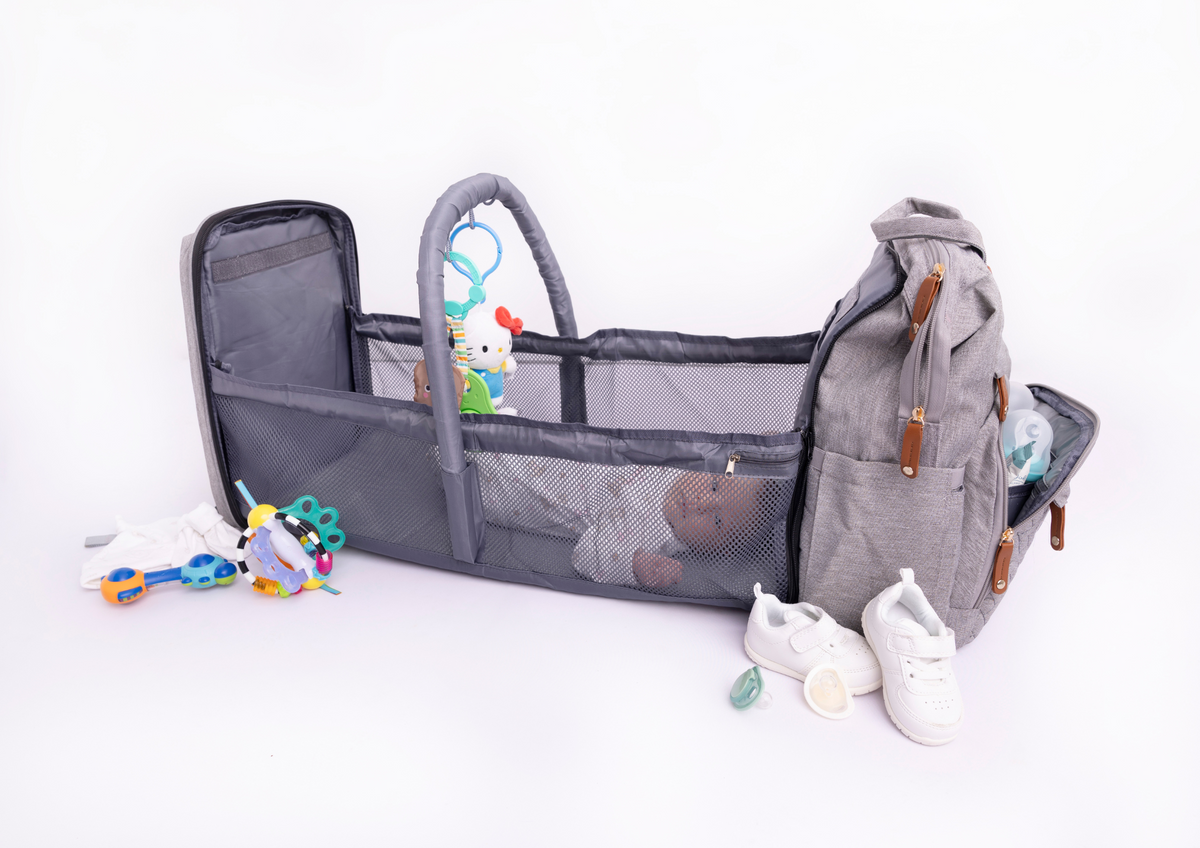
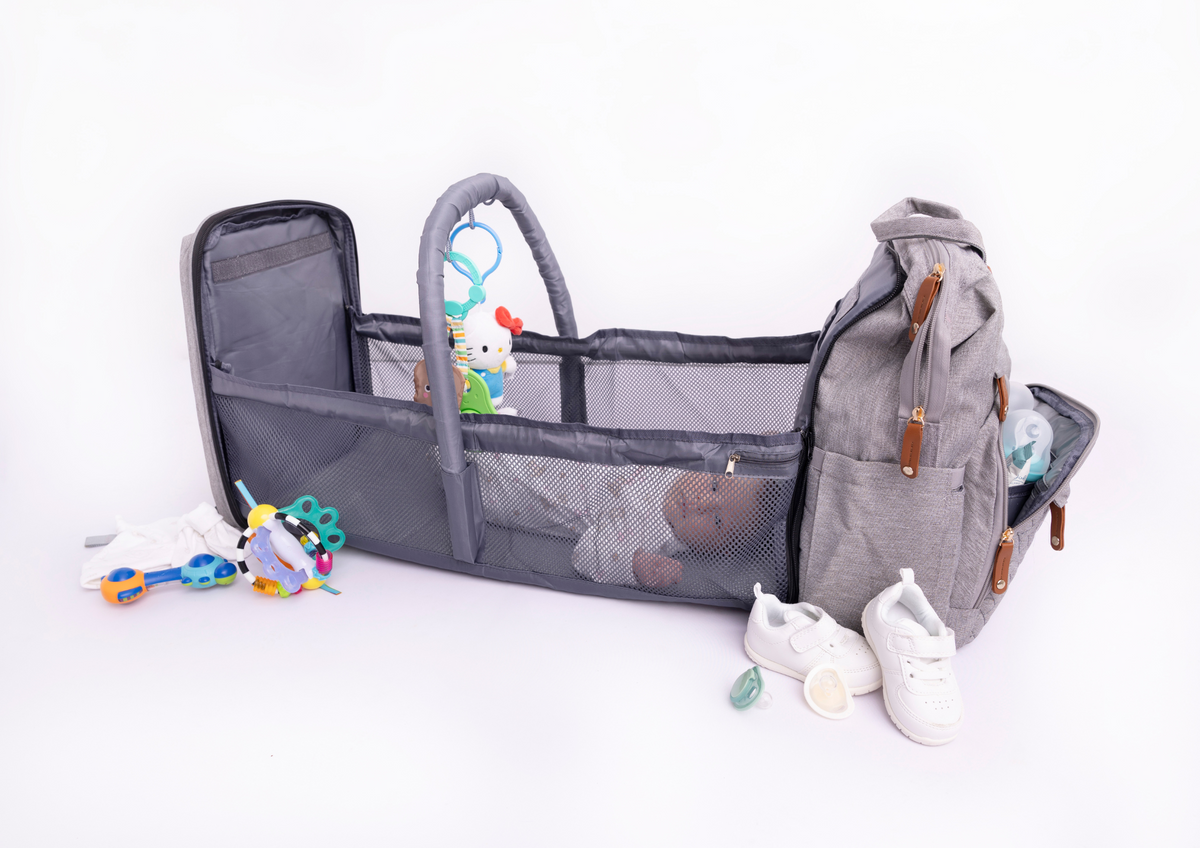
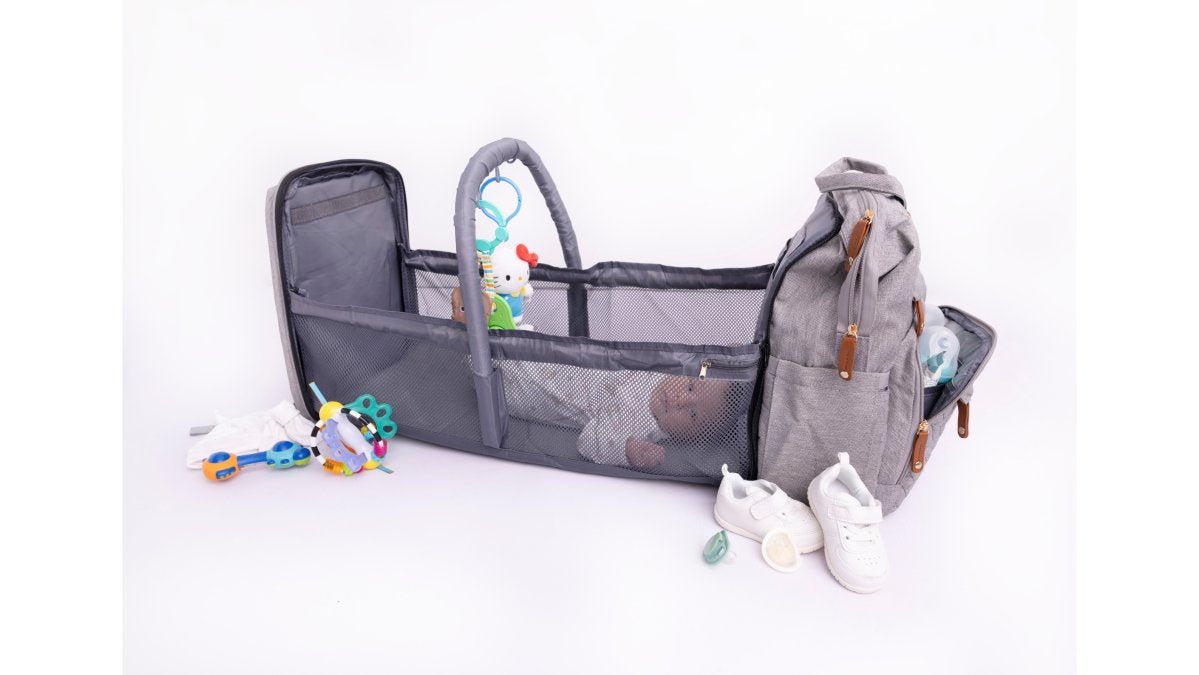
A portable travel cot makes an enormous difference on long flights. The Bon Voyage Baby nappy bag includes a built-in, removable baby bed that transforms your carry-on into a comfortable sleeping space for your baby.
Managing Toddler Tantrums While Travelling
Tantrums are inevitable when travelling with toddlers. The goal isn't preventing tantrums, but managing them effectively.
Prevention and early intervention
Most tantrums escalate from small frustrations into full meltdowns because early warning signs are missed. Watch for signs of escalating distress: whining, clinginess, or difficulty focusing.
Intervene early with simple solutions. If your toddler is hungry, a snack often prevents a tantrum entirely. If they're tired, a quiet activity can reset their emotional state. Maintain routines where possible, toddlers thrive on predictability.
Set realistic expectations about behaviour. Your toddler won't be perfectly behaved throughout your trip. Other travellers understand that parenting in public is challenging.
Recovery and calm-down strategies
When a tantrum occurs, your response matters more than the tantrum itself. Stay calm yourself. Your toddler takes emotional cues from you; if you become frustrated, their distress intensifies.
Remove your child from the immediate situation if possible. If you're in a shop and your toddler is having a meltdown, stepping outside reduces stimulation and often helps them settle faster.
Offer comfort without judgment. Your toddler isn't misbehaving to upset you; they're overwhelmed. Holding them, speaking softly, or offering a comfort item addresses the underlying distress.
Smart Packing Strategies for Travel With Toddler
Efficient packing separates stress-free travel from logistical nightmares. The key is organising items so you can access what you need without unpacking your entire bag.
Carry-on luggage and portable gear
Your carry-on bag should contain everything you need for the first few hours of travel plus essentials if checked luggage is delayed. This includes nappies, wipes, a change of clothes, snacks, medications, and entertainment.
The Bon Voyage Baby Backpack Bed / Nappy Bag solves a common travel problem: it combines a high-capacity nappy bag with a built-in portable cot. Rather than carrying a separate bag plus a folded travel cot, everything integrates into one piece of luggage. The removable baby bed means your baby has a dedicated sleeping space without occupying additional luggage allowance. The mosquito net and shade cover provide protection in unfamiliar environments, and the insulated pockets keep food at safe temperatures.
Portable gear should be lightweight and genuinely useful. A compact stroller works better than a full-size pram for navigating airports. A baby carrier allows you to keep your hands free while your toddler stays close.
Snacks, hydration, and meal planning
Hungry toddlers are irritable toddlers. Pack more snacks than you expect to use. Include options that don't require refrigeration: dried fruit, crackers, nut butters, and cereal.
Hydration is often overlooked. Young children dehydrate quickly, especially during flights or in warm climates. Carry an empty water bottle through airport security, then fill it once you're past screening.
Research meal options at your destination in advance. Identify restaurants that serve toddler-friendly food and grocery shops where you can purchase snacks.
Budget-Friendly Travel Hacks and Post-Trip Recovery
Travelling with toddlers doesn't require unlimited spending.
Saving money without sacrificing comfort
Book flights during shoulder seasons rather than peak holiday periods. Prices drop significantly, and flights are less crowded.
Consider accommodation with kitchen facilities. A serviced apartment costs similar to a hotel but allows you to prepare some meals, reducing restaurant expenses.
Use airline loyalty programs and credit card points to offset travel costs. Pack entertainment from home rather than purchasing new toys for travel.
Managing jet lag and readjusting routines
Jet lag affects toddlers as much as adults. Gradual adjustment works better than forcing your child into a new schedule immediately.
Upon arrival, expose your toddler to natural light at the appropriate times for the new time zone (the CDC). Sunlight is the most powerful signal for adjusting sleep-wake cycles.
Maintain familiar bedtime routines even with the time difference. Expect the first few nights to be challenging; most children adjust within three to five days. Prioritise sleep over sightseeing.
Return home gradually as well. Gradually shift bedtimes back toward your home time zone over several days.
Essential Gear That Makes Travel With Toddler Easier
Certain items genuinely transform the travel experience.
All-in-one nappy bags and portable sleep solutions
A quality nappy bag designed for travel serves multiple purposes. It should have insulated pockets for keeping food at safe temperatures, multiple compartments for organisation, and comfortable straps.
The Bon Voyage Baby Backpack Bed / Nappy Bag addresses the specific challenges of travelling with toddlers. The built-in removable baby bed means your baby has a dedicated sleeping surface that doesn't require additional luggage space. The mosquito net and shade cover protect your child in unfamiliar environments. The integrated USB port and audio jack allow you to charge devices and play audio content without additional cables. At $135.00, this represents genuine value when you consider it replaces both a premium nappy bag and a separate portable cot.
Portable sleep solutions are essential for travel. A lightweight travel cot folds compact but provides a familiar sleeping environment.
Travel accessories for organisation and safety
A wet-wipe dispenser keeps wipes accessible and prevents them from drying out. A harness backpack allows your toddler to walk while remaining safely connected to you. A portable changing mat provides a clean surface for nappy changes in public spaces. Compression bags reduce the space occupied by soft items.
Travelling with a toddler demands preparation, flexibility, and realistic expectations. The strategies covered here address the most common challenges: keeping your child comfortable during flights, managing behaviour in unfamiliar environments, and organising your luggage efficiently. The right gear makes an enormous difference. The Bon Voyage Baby Backpack Bed / Nappy Bag combines high-capacity organisation with a built-in portable sleeping solution, eliminating the need to carry separate items. Discover the Nappy Bag and transform how you travel with your little one.
Frequently Asked Questions
Q: What essential gear do I need for travelling with a toddler?
A: The core items are a portable crib or travel bed, a quality nappy bag with insulated compartments, nappies and wipes, snacks and water bottles, a change of clothes, comfort items like a favourite toy or blanket, and travel documents. An all-in-one solution like a nappy bag with a built-in removable bed eliminates the need to pack separately, saving space and weight. Include a wet-wipe dispenser and USB-charged entertainment options for longer journeys. A portable white noise machine helps with sleep transitions, especially on flights.
Q: How do you manage a long-haul flight with a toddler?
A: Break the flight into manageable phases: boarding early to settle your child, offering a snack or drink during takeoff to ease ear pressure, and rotating between screen time, sensory toys, and quiet activities. Maintain your toddler's sleep schedule as much as possible by using a portable crib if space allows, or letting them rest against you. Pack a change of clothes within arm's reach for accidents or spills. Request bulkhead seating if available for extra space, and don't hesitate to move around the cabin if your child becomes restless. Bring comfort items like a familiar blanket or toy to ease anxiety.
Q: How to maintain a toddler's sleep schedule while travelling?
A: Consistency is key: stick to bedtime routines even in unfamiliar places, use portable sleep solutions like a travel cot or portable bed to create a familiar sleep environment, and maintain nap times as closely as possible. Blackout curtains or a shade cover on a portable crib help signal sleep time. A white noise machine or app masks unfamiliar sounds. Gradually adjust sleep times a few days before travel if crossing time zones. Avoid overstimulation before bed, and keep your toddler's comfort items, pillow, blanket, or soft toy, easily accessible. A portable bed with familiar bedding helps your child feel secure in new spaces.
Q: What are the best snacks for travelling with a toddler?
A: Choose snacks that don't spoil, travel well, and keep your toddler satisfied: soft fruit pouches, crackers, cheese cubes, nuts (if age-appropriate), dried fruit, and yoghurt-covered snacks. Bring familiar favourites your toddler already enjoys to reduce stress and refusal. Pack snacks in individual portions to minimise mess and make distribution quick. Include hydrating options like water bottles or coconut water pouches. Avoid sugary snacks that spike energy and cause crashes, especially on flights. An insulated nappy bag with compartments keeps perishable snacks cool. Always carry more snacks than you think you'll need, delays happen, and a hungry toddler becomes a difficult toddler.

Leave a comment
This site is protected by hCaptcha and the hCaptcha Privacy Policy and Terms of Service apply.