

Table of Contents
- Will Your Portable Baby Bed Fit on an Airplane?
- Understanding Airline Policies on Portable Baby Beds
- Airline Bassinet Weight Limits and Size Restrictions
- How to Pack a Travel Cot for Air Travel
- In-Flight Baby Sleep Safety Tips
- Choosing Between Carry-On and Checked Baggage
- Practical Setup and Storage Solutions During Your Flight
- Conclusion
- Frequently Asked Questions
Last Updated: August 31, 2026
Will Your Portable Baby Bed Fit on an Airplane?
The answer depends on three things: your airline's specific policy, the bed's dimensions, and whether you're checking it or carrying it on board. Most portable baby beds fit in checked baggage, but carry-on restrictions are strict. Your best strategy is to contact your airline directly before travel and confirm their bassinet weight limits and carry-on policies. What works on one carrier may be prohibited on another.
The portable beds that travel best are compact when folded, light enough to meet weight restrictions, and approved by major carriers. This guide walks you through everything you need to know about getting your baby's sleep sanctuary safely onto a plane.
Understanding Airline Policies on Portable Baby Beds
Airline policies on portable baby beds vary significantly, with no universal standard. Some carriers treat them as standard checked baggage, others classify them as sporting equipment or oversized items, and a few restrict them entirely.
Most major carriers allow one portable crib or bassinet per infant at no extra charge, but they must meet specific size and weight requirements (IATA guidelines for air travel). Budget airlines sometimes charge additional fees or impose stricter dimension limits. Australian carriers including Qantas, Virgin Australia, and regional operators have different rules. Qantas permits portable bassinets in checked baggage if they fit within standard checked bag dimensions (typically 158cm length + width + height). Virgin Australia follows similar guidelines but requires advance notice for items exceeding standard dimensions.
The mistake most parents make is assuming a portable bed will fit because it's labelled "travel-friendly." Dimensions matter more than marketing claims. A bed measuring 80cm × 60cm × 30cm when packed will exceed carry-on limits on most aircraft. Check the actual measurements against your airline's specific requirements, not the category, not the brand's claims, but the real numbers.
Request written confirmation from your airline before arriving at the airport. This simple step prevents arguments with gate agents and ensures your setup goes smoothly.
Airline Bassinet Weight Limits and Size Restrictions
Most carriers set a maximum of 10-15kg for the bed itself when empty, with some allowing up to 20kg (general aviation safety guidelines). The weight limit reflects safety concerns about overhead bin capacity and aircraft centre-of-gravity calculations. Exceeding the limit means your bed will be refused at check-in or gate.
Size restrictions are equally strict. Most airlines enforce these carry-on limits:
- Length + width + height must not exceed 158cm (sometimes 150cm)
- Individual dimensions: 56cm × 45cm × 25cm maximum for overhead bins
- Checked baggage allows larger items but still has limits (typically 158cm total)
When packed, a portable travel cot typically measures 70-90cm in length, 50-60cm in width, and 25-35cm in height, often exceeding carry-on limits, which is why most must be checked. Some ultracompact models compress to 55cm × 45cm × 20cm, making them carry-on eligible, but verify this with your airline.
A bed designed for an 18-month-old takes up significantly more space than an infant bassinet. Check whether the bed's dimensions increase when assembled, not just when packed. Weight and age restrictions often overlap, so confirm that the combination of bed weight plus child weight clears both restrictions.
How to Pack a Travel Cot for Air Travel
Start by fully deflating any inflatable components. Air pressure changes during flight can damage partially inflated mattresses. Fully deflate, then pack deflated items separately from the frame.
Disassemble the frame completely into its three sections: base frame, mattress platform, and support bars. Lay these flat rather than stacking vertically, flat packing saves space and distributes weight evenly. Wrap each component in bubble wrap or soft cloth to prevent scratches.
Bundle fabric components separately. Don't stuff them into gaps around the frame. Use the original packing case if available, or invest in a compression bag rated for travel, these reduce volume by 30-40%.
Place heavier components (the frame) at the bottom of your luggage, with lighter items on top. Check your packed cot's weight before heading to the airport using a bathroom scale to confirm it meets your airline's limit.
In-Flight Baby Sleep Safety Tips
Your portable bed cannot be in use during takeoff and landing (Civil Aviation Safety Authority (CASA) regulations on child restraints). Flight crew will require you to secure your baby in an approved seat restraint or hold them safely. This is a regulatory requirement.
Most portable beds aren't crash-tested for aircraft use. Keep your portable bed stowed until the aircraft reaches cruising altitude, and pack it away again before descent begins.
Once you've reached cruising altitude, set up your portable bed carefully away from the aisle. Secure the bed to prevent shifting during turbulence using anchor points or straps designed for this purpose.
Check the mattress firmness before your flight. The surface should be firm enough that you can't easily compress it with your hand. Position the bed away from overhead vents and direct air conditioning, as babies lose heat quickly.
Never leave your baby unattended in the portable bed during flight, even when sleeping. Your presence prevents accidents and allows you to respond immediately if your baby needs attention.
Choosing Between Carry-On and Checked Baggage
Carry-on offers advantages: your bed stays with you, you avoid checked baggage fees, and you have immediate access if your flight is delayed. However, most portable beds exceed standard carry-on dimensions. Ultracompact travel cots designed specifically for air travel may fit, but verify dimensions with your airline before booking.
Checked baggage is the realistic option for most parents. Your portable bed travels in the cargo hold without worrying about overhead bin space. The trade-off is that you won't have access during your flight and must collect it after landing.
Consider your destination and accommodation type. If you're staying in a hotel that provides a crib, checking your portable bed makes sense. If you're staying in an Airbnb without child equipment, you'll want your bed immediately upon arrival.
Budget airlines often charge for checked baggage (typically around AUD 45-90), which can exceed the cost of renting a travel cot at your destination. Compare these options before packing. International flights typically offer more generous baggage allowances than domestic routes.
Practical Setup and Storage Solutions During Your Flight
Request a bulkhead seat or extra legroom seat when booking. These offer more floor space for your portable bed and give you privacy from other passengers.
If you're checking the bed, take a photo of it packed and labeled as documentation if the airline loses or damages it. Include your contact information on the baggage tag.
Keep the bed's assembly instructions accessible, don't pack them in checked luggage. Take photos of the assembled bed before your trip or save the instruction PDF on your phone.
Bring extra bedding and a waterproof mattress protector. A protector prevents urine or spilled liquid from damaging the mattress. Store the bed in a safe location at your accommodation, such as a hotel storage space or back office.
When packing to return home, repeat the disassembly and compression process carefully. Rushing this step often results in damaged equipment.
Conclusion
Will portable baby bed fit airplane? Yes, but only if you understand your airline's specific policies, verify your bed's dimensions and weight, and pack it correctly.
Contact your airline before booking to confirm they accept your portable bed. Verify weight limits, dimension restrictions, and whether it can travel as carry-on or must be checked. Get written confirmation and keep it accessible at the airport.
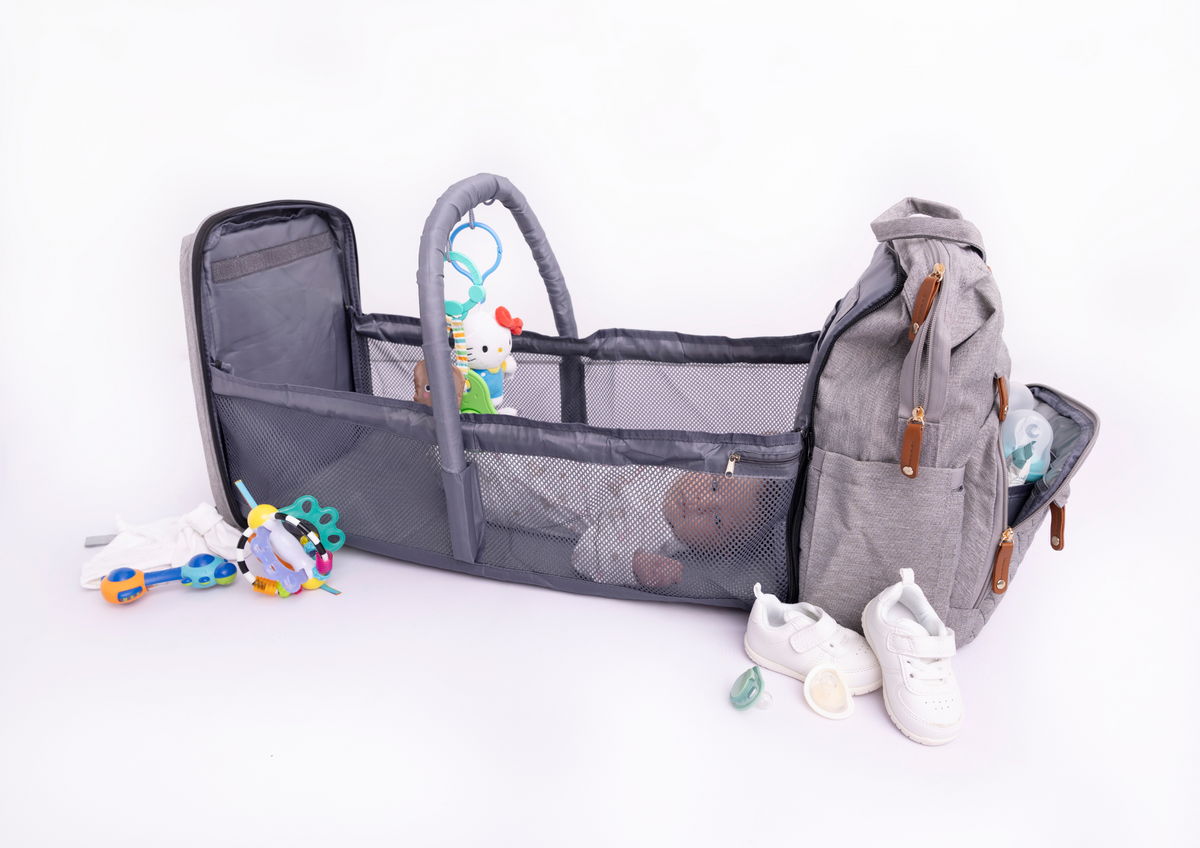
Bon Voyage Baby's all-in-one nappy bag with built-in removable baby bed is designed with air travel in mind. The bed packs down compactly, and includes a mosquito net and shade cover for additional comfort and protection. The durable 900D Oxford Cloth construction withstands airport handling, and the integrated USB port keeps your devices charged during long waits.
Discover the Nappy Bag and travel with confidence, knowing your baby has a comfortable, safe sleep space wherever your adventures take you.
Frequently Asked Questions
Q: Are inflatable portable baby beds allowed on planes?
A: Yes, inflatable portable baby beds are generally allowed on planes, but approval depends on your airline's specific policy. Most airlines permit them as carry-on items if they fit within size and weight restrictions, or as checked baggage. Always contact your airline before your flight to confirm their rules. Some carriers have restrictions on inflatable items due to pressurisation concerns, so it's essential to check directly rather than assume. Airlines often allow portable baby beds in the cabin for long-haul flights, particularly on bulkhead seats where there's extra space.
Q: What are typical airline bassinet weight limits and age restrictions?
A: Airline bassinet weight limits typically range from 6.5 kg to 9 kg, depending on the carrier. Most airlines restrict bassinets to infants up to 12 months old or under 10 kg in weight. However, these limits vary significantly between airlines, so check with your specific carrier before booking. Some airlines offer bassinets only on long-haul international flights or specific aircraft types. Portable travel cots designed for older toddlers may not meet airline requirements, so confirm age and weight specifications with your airline to avoid issues at check-in or boarding.
Q: How do I pack a travel cot to fit airline carry-on requirements?
A: Measure your travel cot when fully collapsed to ensure it fits within your airline's carry-on dimensions (typically 56 x 36 x 23 centimetres). Remove any detachable parts like mattresses or canopies and pack them separately in your main luggage. Use a compression bag or stuff sack to minimise bulk. Place the cot at the bottom of your nappy bag or travel case, with soft items around it for padding. Arrive early at the airport to allow time for staff to inspect the cot if needed. Always keep the cot accessible in case crew need to inspect it during security screening.
Q: What safety precautions should I take for in-flight baby sleep?
A: Never use a portable bed as a substitute for a lap belt during take-off and landing. Babies must be held or secured with an approved child restraint system during these critical phases. Once cruising altitude is reached, position the portable bed on a seat (if permitted) or use it on the cabin floor in a secure location away from aisles. Ensure the bed is stable and cannot shift during turbulence. Keep the baby within arm's reach for monitoring. Avoid placing the bed near emergency exits or galley areas. Always follow crew instructions regarding baby sleep setup, and discuss your plans with flight attendants before attempting to use any portable bed in-flight.

Leave a comment
This site is protected by hCaptcha and the hCaptcha Privacy Policy and Terms of Service apply.