
Last Updated: November 4, 2026
Quick Summary
Keep baby comfortable on long flights by meeting familiar needs: follow your baby’s usual feeding and sleep cues, keep essentials within reach, and adjust calmly to delays or cabin changes. Baby comfort depends more on familiar routines and soothing items than on packing every gadget.
- Check your airline’s infant, bassinet and seat rules before travel.
- Keep one full change of clothes for baby within reach.
- Offer a quiet wind-down before your baby’s usual nap.
- If a delay changes your plan, check feeding, nappy changes and rest needs first.
Table of Contents
- Step 1: Plan how to keep baby comfortable on long flights
- Step 2: What to pack for flying with a baby
- Step 3: How to help a baby sleep on a plane
- Step 4: Feeding a baby on a plane and easing ear pressure
- Step 5: Manage baby ear pressure on a flight
- Step 6: Handle cabin changes, sensory overload and delays
- Step 7: Reset sleep after the flight and choose travel gear
- Frequently Asked Questions
Step 1: Plan how to keep baby comfortable on long flights
There is no formal 2026 research with statistics on how to keep baby comfortable on long flights. Baby comfort on a long flight depends more on meeting familiar needs than packing every gadget.
A common mistake is planning only for the flight time. Build your plan around the whole travel day, including waiting at the gate and getting to your next stop.
Use this quick plan:
- Check your airline’s infant, bassinet and seat rules.
- Note usual feed and nap cues.
- Keep key items easy to reach.
- Plan a quiet reset after landing.
Use this quick plan to cover your baby’s needs across the travel day.
| Step | What to do | When |
|---|---|---|
| Check travel rules | Check infant, bassinet and seat rules | Before travel |
| Note familiar cues | Note usual feed and nap cues | When planning |
| Keep items accessible | Keep key items easy to reach | During travel |
| Plan a reset | Plan a quiet reset after landing | After landing |
Step 2: What to pack for flying with a baby
A good carry-on for flying with a baby keeps feeding, nappy changes, sleep and comfort items within reach. Pack for needs, not every possible scenario. A familiar item and spare clothes often matter more than extra toys.
Pack these carry-on essentials:
- Nappies, wipes and a change mat.
- Spare clothes for baby and parent.
- Usual feeding supplies and a comfort item.
- A light layer for cooler cabin air.
- Any health items your child normally needs.
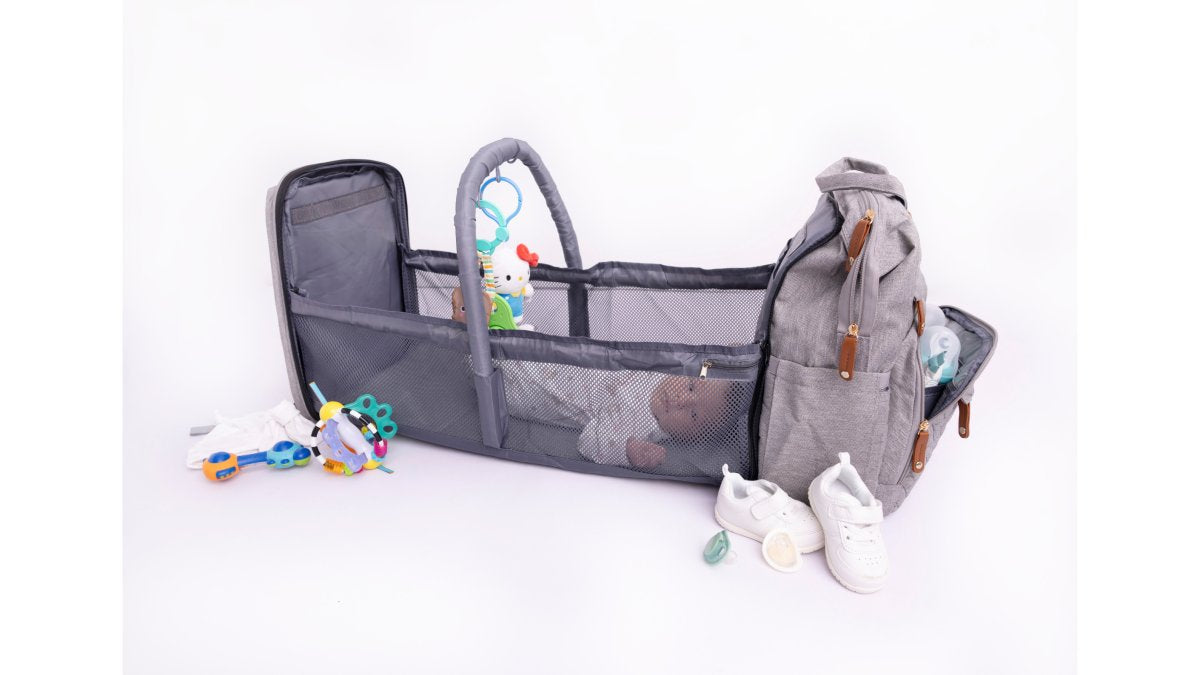
A common mistake is putting all spare clothes in checked luggage. Keep one full change where you can reach it. Our Nappy Bag has a built-in, removable baby bed, insulated pockets and a wet-wipe dispenser to help keep travel items together.

Step 3: How to help a baby sleep on a plane
To help a baby sleep on a plane, keep familiar sleep cues and follow the child’s usual routine as closely as the flight allows. A long-haul flight can disrupt naps, so aim for a calm space rather than a perfect schedule. Keep your baby’s usual sleep needs in mind.
Try this simple routine:
- Offer a quiet wind-down before the usual nap.
- Use a familiar comfort item if suitable.
- Keep lights and noise low where possible.
- Ask the airline about bassinet availability and rules.
- Let the baby rest when sleepy, even if timing shifts.
A common mistake is trying to force sleep at a set time. Watch your baby’s cues instead.
Step 4: Feeding a baby on a plane and easing ear pressure
Choose nursing, bottle feeding or a pacifier based on what your baby already uses. Keep supplies close, since the seat-belt sign or a delay can change your timing.
Before boarding, place feeds and cleaning items in an easy-to-reach pocket. If your baby is hungry, feed when needed rather than waiting for a planned moment.
**** If your baby will not feed, stay calm and offer their usual soothing method. Avoid adding unfamiliar products just for the flight.
Step 5: Manage baby ear pressure on a flight
Check your airline’s rules too, since bassinet access, seat assignment and infant travel policies vary.
If crying starts, try a calm sequence:
- Hold your baby close if safe to do so.
- Offer a feed or pacifier.
- Reduce noise and bright stimulation.
- Ask cabin crew for help if needed.
The goal is comfort, not silence. A crying baby is not a sign that you have failed.
Step 6: Handle cabin changes, sensory overload and delays
A baby may find a busy cabin hard to settle in, especially after a long wait or a missed nap. Keep the response simple: reduce noise and activity, offer a familiar comfort item, and meet basic needs.
Layering clothes makes it easier to adjust to cabin temperature changes. Use a light layer that is easy to remove, and keep another spare within reach. For a red-eye flight, plan for interrupted sleep and keep your own essentials close too.
If a delay changes your plan, check the next feed, nappy change and rest need first. The best travel hack is a flexible routine, not a tightly timed schedule.
Step 7: Reset sleep after the flight and choose travel gear
After landing, help your baby adjust to the new sleep schedule by returning to familiar cues and a calm routine.
For travel gear, choose items that solve a real problem without making the journey harder. Our guide to choosing a travel bassinet bag explains what to look for. The Bon Voyage Baby Nappy Bag has a removable baby bed. It costs $135.00 AUD.
The bag is made from 900D Oxford Cloth and includes a USB port and audio jack. Check your airline’s cabin baggage rules before travel. A bag’s listed features do not confirm that it fits every overhead bin.
Frequently Asked Questions
How do I keep my baby comfortable on a long flight?
Plan around your baby’s usual needs rather than trying to keep them occupied every minute. Pack spare clothes, nappies, familiar comfort items and feeding supplies in your carry-on. Dress your baby in layers for changing cabin temperatures, and keep the sleep routine familiar where possible. Check the airline’s rules for infant seating, bassinets and carry-on items before departure.
How can I help my baby sleep on a plane?
Keep familiar parts of the bedtime routine, such as a feed, a quiet song or a comfort item, and reduce stimulation when your baby is ready to sleep. A red-eye flight does not guarantee that a baby will sleep, so pack for awake periods too. Ask the airline about bassinet availability and requirements before booking. Use only sleep equipment permitted by the airline, and follow its instructions for safe use.
What should I pack for a long flight with a baby?
Pack more nappies and spare clothing than you expect to use, plus wipes, feeding supplies, a familiar comfort item and any usual teething relief. Keep essentials accessible for quick changes and delays. Check airline rules before carrying sleep gear or liquids.
How can I help my baby’s ears during take-off and landing?
Keep feeding supplies within reach rather than buried in your bag. If your baby is unwell or you have concerns about ear discomfort, ask a health professional for advice before flying.
Long flights can unsettle even a familiar routine, so focus on the next clear need: feed, change, rest or comfort. If you want one bag for baby sleep and travel organisation, discover the Bon Voyage Baby Nappy Bag and its built-in removable bed, insulated pockets and wet-wipe dispenser. Get started with Bon Voyage Baby and keep your baby’s travel essentials together.


Leave a comment
This site is protected by hCaptcha and the hCaptcha Privacy Policy and Terms of Service apply.