
Last Updated: October 24, 2026
Quick Summary
Safe sleeping tips for babies on vacation include using a firm, flat travel cot with a fitted mattress, maintaining your baby's regular sleep routine, and keeping the sleep area free from pillows, blankets, and bumpers. Position the cot on a flat, level surface away from windows and hazards, and dress your baby appropriately for the room temperature.
- Use a portable travel cot with a firm mattress that fits snugly without gaps
- Keep your baby's sleep space bare with only a fitted sheet, no pillows or blankets
- Maintain consistent nap and bedtime routines even while travelling across time zones
- Position the cot in a safe corner away from windows, cords, and furniture edges
- Never co-sleep with your baby in hotel beds due to increased suffocation risk
Table of Contents
- 1. Choose a Firm, Flat Sleep Surface for Your Baby
- 2. Baby Travel Cot Safety: What You Need to Know
- 3. Hotel Room Baby Sleep Setup That Works
- 4. What to Pack for Baby Sleep on Holiday
- 5. Maintain a Baby Sleep Routine While Travelling
- 6. Keep Your Baby Cool and Comfortable Away From Home
- 7. Common Mistakes to Avoid When Your Baby Sleeps on Vacation
- Setting Up Your Baby's Portable Sleep Space Before You Travel
- Frequently Asked Questions
1. Choose a Firm, Flat Sleep Surface for Your Baby
The foundation of safe sleeping tips for babies on vacation starts with the right surface. When following safe sleeping tips for babies on vacation, your baby needs a firm, flat place to sleep, not a soft couch, armchair, or cushioned lounger. Soft surfaces increase the risk of suffocation and other sleep-related dangers.
A portable travel cot with a firm mattress is your best option. It keeps your baby elevated and separate from shared sleeping spaces. The mattress should fit snugly so nothing can shift underneath.
When selecting a travel sleep surface:
- Check that the mattress is completely flat with no incline
- Ensure fitted sheets fit tightly without bunching
- Remove all pillows, blankets, and bumpers from the sleep area
- Test the frame for stability before placing your baby down
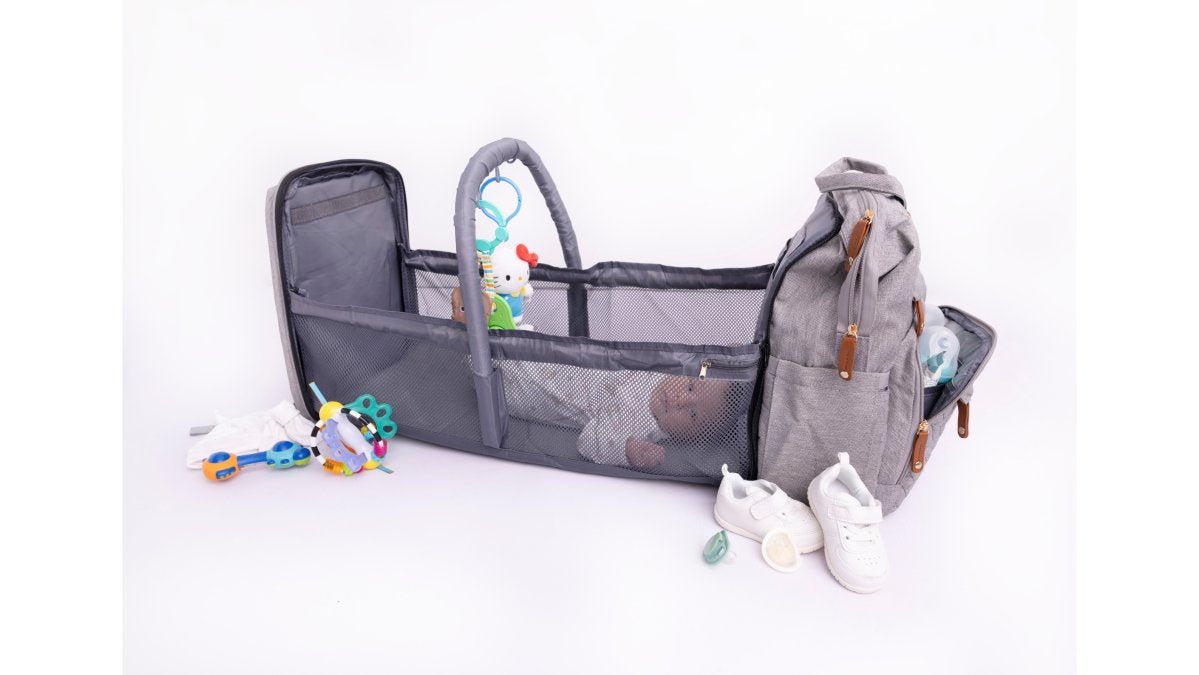
Bon Voyage Baby's all-in-one nappy bag includes a built-in baby bed designed with safety as the priority. The removable bed provides a firm, flat sleeping space that meets the standards parents need when away from home.
2. Baby Travel Cot Safety: What You Need to Know
A baby travel cot is a portable sleeping enclosure designed to keep your infant safe and contained while you're away. It serves as a self-contained sleep sanctuary that travels with you, eliminating the need to rely on unfamiliar hotel beds or borrowed equipment.
Safe travel cots share key features:
- Sturdy frame that doesn't wobble or collapse
- Firm, fitted mattress with no gaps around edges
- Secure locking mechanisms that hold the frame in place
- Breathable sides for airflow and visibility
- Lightweight design for easy transport
Before each trip, inspect your travel cot for damage. Check that all joints are secure and the mattress shows no signs of wear. If you're using a cot you haven't travelled with before, set it up at home first to understand how it works.
Many parents find that having a dedicated travel sleep space reduces stress. Your baby sleeps in a familiar structure, and you know the environment meets safety standards. Why Choose Travel Bassinet Bags: A 2026 Guide offers detailed guidance on selecting and using travel cots effectively.
Watch out: Never place a travel cot near cords, blind strings, or window coverings. These pose strangulation hazards.
3. Hotel Room Baby Sleep Setup That Works
Setting up your baby's sleep space in a hotel room requires planning and attention to detail. Your goal is to create a safe, familiar environment despite the unfamiliar surroundings.
Start by choosing the safest corner of the room, away from windows, doors, and furniture edges. Place the travel cot on a flat, level surface. Never position it on a bed or raised platform.
Your setup checklist:
- Clear the area around the cot of hazards
- Ensure the cot is fully assembled and locked
- Use only the fitted sheet that comes with the cot
- Keep the room at a comfortable temperature (cool but not cold)
- Position a nightlight or lamp where you can see your baby without bright light
- Keep your phone and baby monitor within arm's reach
If your hotel room is small, request a room with a separate seating area or sleeping alcove. This gives your baby's cot space away from the main bed and TV noise.
The built-in mosquito net and shade cover on Bon Voyage Baby's nappy bag protect your baby from insects and direct sunlight, two common hotel room challenges parents face.
4. What to Pack for Baby Sleep on Holiday
Packing the right items ensures your baby sleeps well and stays safe throughout your trip. Focus on essentials rather than trying to recreate your entire home setup.
Pack these sleep-specific items:
- Fitted sheets that fit your travel cot mattress snugly
- A lightweight blanket or sleep sack appropriate for the climate
- Your baby's regular sleep clothing (pyjamas or sleep suits)
- A white noise machine or app to mask unfamiliar sounds
- Blackout curtains or a portable blackout blind
- Your baby's preferred comfort item (stuffed toy or dummy if used)
- Nappies and wipes for nighttime changes
- Any medications or creams your baby uses regularly
Don't pack bulky bedding. A single fitted sheet and one backup is sufficient. Skip the pillows, bumpers, and quilts entirely, they're not safe in a travel cot and add unnecessary weight.
Bon Voyage Baby's nappy bag features insulated pockets and compartments designed to keep sleep-related items organised and accessible. The wet-wipe dispenser means you're never without supplies for quick nappy changes during the night.
5. Maintain a Baby Sleep Routine While Travelling
Babies thrive on routine, even when away from home. Maintaining familiar sleep patterns helps your baby feel secure and sleep better in unfamiliar places.
Start with nap times. Keep naps at roughly the same times you do at home, even if you're crossing time zones. A consistent nap schedule helps regulate nighttime sleep and prevents overtiredness.
Your evening routine should mirror home as closely as possible:
- Dim the lights an hour before bedtime
- Give your baby a bath if you normally do
- Change into sleep clothes
- Read a story or sing a familiar song
- Keep the room quiet and cool
- Put your baby down at the usual bedtime
Time zone changes complicate routine. If you're traveling across multiple zones, gradually shift your baby's sleep schedule a few days before departure. Move bedtime 15 minutes earlier or later each day until you match the destination time zone.
Jet lag affects babies just as it affects adults. Expect the first 2-3 nights to be unsettled. Stick to your routine anyway, consistency helps your baby adjust faster than varying bedtimes would.
6. Keep Your Baby Cool and Comfortable Away From Home
Temperature and comfort directly affect how well your baby sleeps. Hotels often have heating and cooling systems you can't fully control, so you need strategies to manage your baby's environment.
Check the room temperature before bedtime. Babies sleep best in cool rooms around 18-20°C.
Dress your baby appropriately for the climate:
- In warm destinations: lightweight sleep suit or just a nappy and sleep sack
- In cool destinations: warm pyjamas and a sleep sack rated for the temperature
- Avoid overdressing, overheating increases sleep risks
Use layers so you can adjust without disturbing your baby. A sleep sack that's appropriate for the temperature is safer than loose blankets.
Humidity affects sleep quality. If your destination is very humid, a small dehumidifier in the room helps. If it's dry, a humidifier prevents congestion that disrupts sleep.
The shade cover included with Bon Voyage Baby's nappy bag blocks direct sunlight and heat, helping maintain a comfortable microclimate for your baby's sleep space even in bright hotel rooms.
7. Common Mistakes to Avoid When Your Baby Sleeps on Vacation
Parents often make small errors while travelling that compromise their baby's sleep safety. Knowing these mistakes helps you avoid them.
The biggest mistake is sharing a bed with your baby. Co-sleeping increases suffocation risk, especially in unfamiliar beds with hotel bedding. Your baby sleeps safer in their own travel cot, even if it means less sleep for you.
Other common errors:
- Using the hotel's cot without inspecting it first (some are old or damaged)
- Adding pillows, blankets, or bumpers to make the cot more comfortable
- Leaving the cot near windows or furniture your baby could pull down
- Skipping the travel cot entirely and using a playpen not designed for sleep
- Not testing the cot setup before your baby's first nap
- Placing the cot on a raised surface like a bed or dresser
- Leaving loose cords or strings within reach of the cot
Watch out: Never leave your baby unattended in a travel cot, even for a few minutes. Accidents happen quickly in unfamiliar spaces.
Another mistake is abandoning your routine entirely. Parents often think "we're on holiday, so bedtime doesn't matter." Your baby still needs consistent sleep. Skipping routines leads to overtired babies who sleep poorly and wake frequently.
Parents often make preventable errors while travelling that compromise their baby's sleep safety.
| Mistake | Why It's Unsafe | What to Do Instead |
|---|---|---|
| Sharing a bed with baby | Increases suffocation risk in unfamiliar beds | Use a separate travel cot |
| Using hotel cot without inspection | Some are old or damaged | Inspect cot before use |
| Adding pillows, blankets, or bumpers | Not safe in travel cots | Keep cot bare with fitted sheet only |
| Placing cot near windows or furniture | Baby could pull items down | Position cot in safe corner |
| Using playpen designed for play, not sleep | Not designed for safe sleep | Use travel cot designed for sleeping |
| Leaving cot on raised surface | Cot could fall or tip | Place on flat, level floor |
| Leaving loose cords within reach | Strangulation hazard | Keep cords and strings away from cot |
| Abandoning bedtime routine | Overtired babies sleep poorly | Maintain consistent sleep schedule |
Setting Up Your Baby's Portable Sleep Space Before You Travel
Preparation before you leave home makes travel smoother and safer.
Set up your travel cot at home at least once before the trip.
Read the instruction manual completely. Different travel cots have different assembly steps. Understanding yours prevents mistakes that could compromise safety.
Check that your fitted sheets fit properly. Sheets that bunch up or don't fit tightly create gaps where your baby could get stuck.
Create a packing list specific to sleep items.
Practice your bedtime routine with the travel cot in place. This helps your baby get used to the new sleep space before you travel.
Bon Voyage Baby's all-in-one design means your baby's sleep space, storage for sleep items, and organisation tools travel together.
Frequently Asked Questions
Where should a baby sleep while on holiday?
Babies sleep safest on a firm, flat surface away from soft objects, pillows, and blankets. A portable travel cot, bassinet, or play yard with a fitted sheet is ideal. Avoid couches, armchairs, and car seats for overnight sleep. If using a travel cot, ensure it meets safety standards and is set up correctly on a level surface away from cords, blinds, and window coverings.
What should I pack to help my baby sleep safely while travelling?
Pack fitted sheets that fit your portable sleep surface, a lightweight sleep sack or wearable blanket instead of loose blankets, familiar comfort items like a favourite toy or muslin cloth, and blackout curtains or a shade cover to maintain sleep cues. Bring any medications or supplements your baby uses, and pack extra nappies and wipes for nighttime changes. A portable white noise machine or app can help mask unfamiliar sounds.
How can I maintain my baby's sleep routine while on vacation?
Keep bedtimes and wake times as consistent as possible, even with time zone changes. Stick to familiar pre-sleep routines like a bath, story, or song. Maintain the same sleep environment cues: darkness, quiet, and cool temperature. If your baby uses a sleep sack or particular bedding, bring it with you. Gradual adjustments to new time zones work better than sudden shifts; move bedtime by 15 minutes each day.
Is it safe for a baby to sleep in a travel cot overnight?
Yes, travel cots designed for overnight sleep are safe when they meet safety standards and are used correctly. Ensure the mattress is firm and fits snugly, use a fitted sheet, and keep the cot free of pillows, blankets, and bumpers. Set it up on a flat, level surface away from hazards. Never leave your baby unsupervised, and check the cot regularly for wear or damage. Portable sleep solutions like those with built-in beds offer the same safety when set up properly.
Safe sleeping tips for babies on vacation depend on planning, the right equipment, and consistent routines. A firm, flat travel cot, a predictable bedtime schedule, and a comfortable room environment give your baby the best chance of sleeping well away from home. Bon Voyage Baby combines a portable sleep space with the storage and organisation features parents need, so you can focus on enjoying your holiday while your baby rests safely.

Leave a comment
This site is protected by hCaptcha and the hCaptcha Privacy Policy and Terms of Service apply.